By Loke-Thar
Formal education, for the large majority of people, ends with completion of high school. Only around 20 per cent of those who pass the Matriculation Examinations continue with higher education as full-time students. Most of those who find work after completion of basic education may continue with higher education through enrolling in correspondence courses or attending part-time higher education courses. Hence, for most people, the “formal education” ends by the time they are around 22 or so years old. Thereafter, all means of acquiring further knowledge and education, particularly in their chosen field of employment, are mostly through the “non-formal” or “informal” mode.
Assuming an average lifespan of around 60 years, it is clear that only about one third of one’s life is spent in acquiring education in the “formal” mode. The rest of one’s life is spent in acquiring education, most of which is for the purpose of keeping up with the advancements in one’s occupation and to keep on being employable. In other words, lifelong learning is also for lifelong learning and advancing one’s quality of life.
Let’s take the case of a skilled worker, say an auto-mechanic. With the advances in Automobile Technology, like the use of electronic components to monitor every possible function, the auto-mechanic who cannot use the instruments and equipment to monitor or detect faults in the auto system will soon lose some of his business. On the other hand, if the mechanic had kept on learning about the technological advances throughout his occupational life, he would have had a better chance of maintaining his earnings.
Lifelong learning is learning throughout one’s life, and it can take place through formal learning modes as well as through non-formal and informal modes. In fact, most lifelong learning is self-learning, which arises out of one’s motivation to enhance one’s capability, competence, employability and hence enhance one’s earning capacity and quality of life as well. For Lifelong Learning to be valued, mechanisms for recognition of lifelong learning should also be in place.
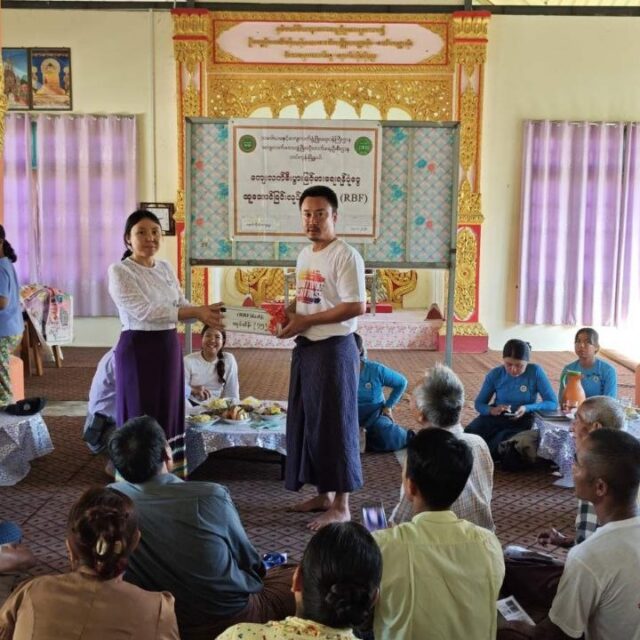
A high proportion of lifelong learning is experiential and takes place within the context of work and at the workplace. Learning through experience at work, whether through successful outcomes or even failures, leaves lasting impressions, which lead to improved performance in the future and enhance the earning capacity of the person. Another aspect of lifelong learning is through the experience of others. This type of learning can be enhanced if the experienced person shares his/her experience with others through hands-on teaching, talks, seminars, conferences, etc.
A common mode of lifelong learning is through reading books, newspapers, magazines, etc. This has been the universal lifelong learning mode prior to the advent of broadcasting, television and advances in Information Technology. Books are, in most instances, accessible to those seeking knowledge and information. There are public libraries in most cities, towns and nowadays even in large villages, and they are a cost-effective mode of lifelong learning.
Another mode of learning is the broadcast media as mentioned above. Even in the remote villages where TV has not yet reached, the most common mode of learning is, of course, the Radio.
Another mode of learning is visiting places. For those who can afford it, the best way to learn about a country or a particular place is to visit it. In Myanmar, even the not-so-rich people from the villages visit pagodas and holy sites, often in large groups. Visiting places also includes visits to Museums and Exhibitions.
Nowadays, the most often used source of lifelong learning is the internet. Knowledge on almost any subject or topic can be obtained from various sources through the internet.
To sum up, whatever means or mode is used, the fact remains that one needs to resort to lifelong learning if one is to maintain one’s relevancy as well as earning capacity and to keep up with advances in Technology and the pace of living in this fast changing world.