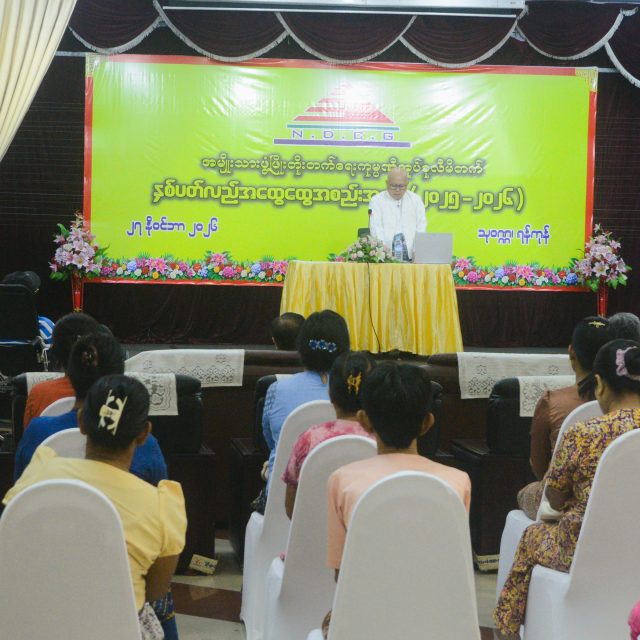
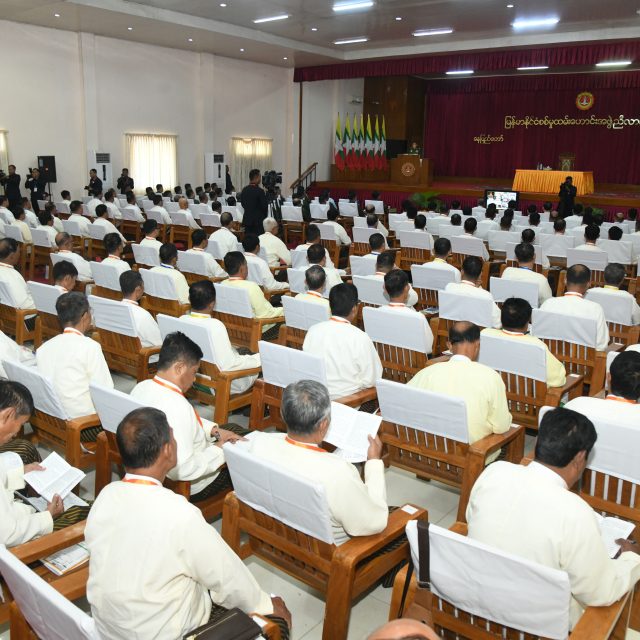
The 25th Traditional Myanmar Medicine Practitioners’ Conference and the Traditional Myanmar Medicine Symposium will be held soon to expand primary healthcare services for the public through traditional Myanmar medicine.
Myanmar’s traditional medicine is a valuable national heritage that has been preserved and passed down from generation to generation since the time of our forefathers. Hence, traditional Myanmar medicine must also be systematically developed and advanced as a national responsibility. In promoting its development, emphasis must be placed on preserving traditional knowledge, conducting research to assess the safety and efficacy of medicines and therapeutic methods, and applying the knowledge gained through such research to public healthcare.
Traditional medicine practitioners have to emphasize the development of traditional Myanmar medicine through the application of modern technologies, compliance with professional ethics among practitioners in order to uphold the dignity and reputation of traditional medicine, and preservation, safeguarding and further promotion of traditional medicine practices and methods.
It is necessary to bridge the practical experience of veteran traditional medicine practitioners with the research capabilities of the next generation of professionals. The university, hospitals and relevant organizations are urged to work together in compiling and documenting the professional knowledge and experience of senior practitioners, incorporating these records into teaching, and providing young professionals with opportunities to participate actively in research activities.
The government has been undertaking various measures, including upgrading traditional medicine hospitals and clinics, training and producing qualified professionals, organizing annual research paper-reading sessions, and supervising the production, distribution and sale of traditional medicines to ensure compliance with prescribed standards and specifications. To generate greater practical benefits for the public through these efforts, research, pharmaceutical production and healthcare services must be closely integrated.
In expanding primary healthcare services, patient safety must be given priority. Health education activities should clearly explain disease prevention, the proper use of medicines in accordance with instructions, and the importance of seeking timely medical attention at hospitals and clinics in a way that the public can easily understand.
The government has been undertaking various measures, including upgrading traditional medicine hospitals and clinics, training and producing qualified professionals, organizing annual research paper-reading sessions, and supervising the production, distribution and sale of traditional medicines to ensure compliance with prescribed standards and specifications. To generate greater practical benefits for the public through these efforts, research, pharmaceutical production and healthcare services must be closely integrated.
Myanmar traditional medicine is a profound field of knowledge that has been relied upon and widely practised by all Myanmar ethnic communities for many centuries, with a long history of effective medicinal properties and treatments. However, many of its valuable medicinal remedies have gradually faded into obscurity for various reasons. Therefore, veteran traditional medicine practitioners and a new generation of experts must work together to rediscover and develop Myanmar’s valuable traditional remedies with the support of modern technologies and strive to provide healthcare services to the public.