By Dr Myint Soe Aung
The Festival of Lights is more than an event of mere celebration; it is a gentle reminder that the greatest light lies in what we carry within ourselves.
As we look back at the last Thadingyut, we remember how beautifully Myanmar celebrated its Festival of Lights, filling homes, streets, monasteries and pagodas with warmth, joy and devotion. Beyond the celebrations, the festival brought a special feeling of hope, reminding us that even in difficult times, light never loses its way. It gave us a reason to look towards Myanmar’s future with renewed faith, peace and optimism.
At the heart of Thadingyut lies an important episode from the life of Gautama Buddha. According to Buddhist tradition, after attaining enlightenment, the Buddha ascended to Tāvatiṃsa, the heavenly realm, where he spent three months teaching the Abhidhamma to the celestial beings, including his mother, who had been reborn there. His teaching was also an expression of gratitude towards his mother. On the full moon day of Thadingyut, the Buddha descended to the human world at Sankassa. The celestial beings illuminated his path with three magnificent stairways of gold, silver and precious stones. People on earth welcomed him with lamps and lights. This sacred return became the spiritual foundation of Thadingyut.
The historical development of Thadingyut is closely connected with the growth of Buddhism in Myanmar. During the eleventh century, King Anawrahta of Bagan played a major role in strengthening Theravada Buddhism through royal patronage and religious reforms. The establishment of Buddhism as a powerful cultural and intellectual force helped shape the religious traditions of the country. Over the centuries, Thadingyut developed from a religious observance into a major public celebration. Historical records and paintings at Bagan preserve scenes of illuminated pagodas and traditional oil lamps, showing how deeply the festival became rooted in Myanmar’s cultural memory. Its customs also grew to include paying respect to parents, teachers, monks and elders, asking forgiveness and expressing gratitude.
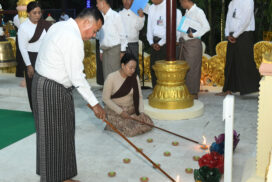
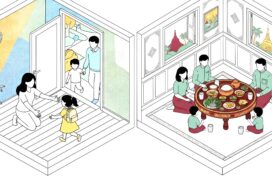
For the people of Myanmar, as we know Buddhism is not simply a system of religious belief. It is deeply connected with everyday life, social relationships, moral conduct and the understanding of existence. The devotion expressed during Thadingyut reflects this relationship. People visit monasteries, offer food and flowers, light candles and share meals with neighbours. Younger members of families pay respect to their elders, while elders offer blessings and forgiveness. These practices bring generations together and preserve a valuable culture of mutual respect. As October gives way to November, Myanmar’s festive spirit continues with Tazaungdine, another important Festival of Lights. This year, its celebrations will reach their peak around the third week of November. One of its most spectacular attractions is the hot-air balloon festival, particularly famous in Taunggyi. Beautifully decorated balloons rise into the night sky, bringing together tradition, creativity and community celebration. It is a wonderful example of how Myanmar’s cultural heritage continues to evolve while remaining connected to its roots.
The beauty of this season becomes even more meaningful when we look beyond national boundaries. From Myanmar to India, the month of lights brings together different cultures through a shared language of faith, wisdom and hope. Myanmar’s Thadingyut, celebrated in October, is followed by India’s Deepavali, celebrated this year just recently, while Myanmar now looks forward to Tazaungdine! Though each festival has its own history and religious significance, together they create a beautiful sequence of celebrations that connects people across geographical and cultural borders. Thadingyut welcomes the Buddha’s return to the human world with the illumination of lamps, celebrating wisdom, gratitude and the triumph of light. Diwali carries the universal message of light overcoming darkness, ignorance giving way to knowledge and hope overcoming pessimism. Tazaungdine continues this spirit through the generosity of Kathina robe offerings: the devotion of Mathoe Thingan weaving and the magnificent lights that illuminate Myanmar’s night skies.
One of the most significant traditions of this season is the Kahtein, or Kathina, which is a robe-offering ceremony. After the three-month Buddhist rainy-season retreat, known as Vassa, devotees offer robes and other necessities to monks. This tradition is observed throughout the Buddhist world, particularly in Myanmar, Thailand, Sri Lanka, Cambodia and Laos. It represents generosity, respect and the close relationship between monastic and lay communities.
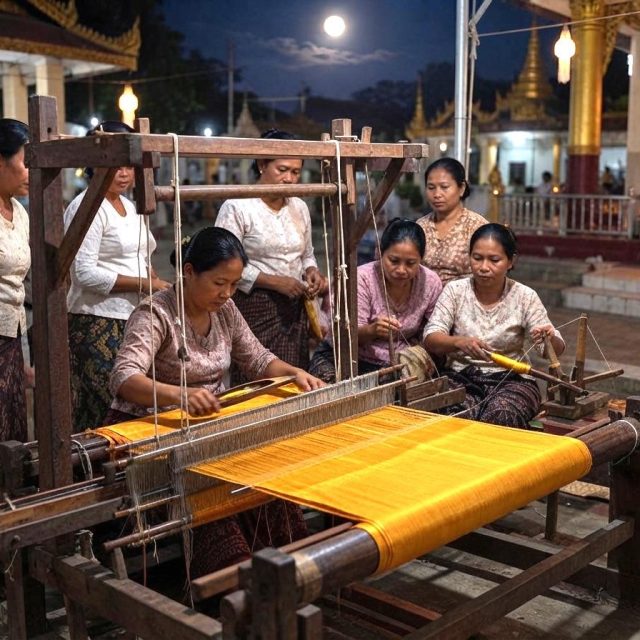
Among Myanmar’s most beautiful cultural traditions is the overnight weaving of Mathoe Thingan, a freshly woven Buddhist robe. During Tazaungdine, groups of women gather at monasteries and pagodas to weave, cut and stitch robes throughout the night, completing them before dawn. The robes are then offered to monks in the morning. There is something deeply moving about this tradition.
Women work together, often without sleep, not for personal recognition but as an expression of devotion and collective generosity. It is a living example of how faith, craftsmanship and community spirit can come together.
From the lamps of Thadingyut to the brilliance of Diwali and the glowing skies of Tazaungdine, the light travels across traditions, yet its message remains beautifully connected. For a young generation of Myanmar, these connections should be a source of pride and inspiration. We inherit a civilization shaped by Buddhist wisdom, extraordinary architecture, ancient traditions and a deep culture of generosity. But preserving our heritage does not mean remaining only in the past. It means carrying its finest values into the future. We must protect our traditions while building a society that values education, knowledge, equality, compassion and peace. Our cultural identity should become a source of strength, not a boundary separating us from the rest of the world.
For a young generation of Myanmar, these connections should be a source of pride and inspiration. We inherit a civilization shaped by Buddhist wisdom, extraordinary architecture, ancient traditions and a deep culture of generosity. But preserving our heritage does not mean remaining only in the past. It means carrying its finest values into the future. As a young generation, we have a responsibility to understand that the real meaning of these festivals goes far beyond their outward beauty. Thousands of lamps can illuminate a city, but only kindness can illuminate society. A beautifully decorated pagoda is a wonderful sight, but a peaceful mind and a compassionate heart are even more beautiful. The true offering to the Buddha is not simply a candle, a flower or a robe; it is the effort to practise truth, generosity, forgiveness and love in our everyday lives.
There is perhaps no more beautiful expression of this spirit of light than the words of the Buddha in the Dhammapada (Verse 387):
“Divā tapati ādicco,
Rattiṃ ābhāti candimā;
Sannaddho khattiyo tapati,
Jhāyī tapati brāhmaṇo;
Atha sabbam ahorattaṃ,
Buddho tapati tejasa.”
(The sun shines by day, the moon illuminates the night, the warrior shines in armour, and the meditating sage shines through wisdom. But the Buddha shines with his radiance throughout the day and night.)
These timeless words beautifully express the deeper meaning of Thadingyut. The lamps that illuminate Myanmar’s streets and pagodas are symbols of something far greater: the light of wisdom, compassion and understanding. The Buddha’s radiance is not merely the brightness of the physical world; it is the light that removes ignorance, overcomes hatred and guides humanity towards truth. This is the light that every generation must strive to carry within itself.
Myanmar has given the world a remarkable spiritual heritage. Its people have preserved traditions of meditation, Buddhist learning, generosity and community life for centuries. Today, we hope for a future in which this heritage shines alongside peace, education, prosperity and human dignity. Let us preserve our heritage while building a future rooted in knowledge, peace, dignity and understanding. May every young heart become a flame of hope, illuminating the path towards a brighter and more harmonious Myanmar. A new dawn is waiting, and the light of a beautiful tomorrow shall shine upon Myanmar!