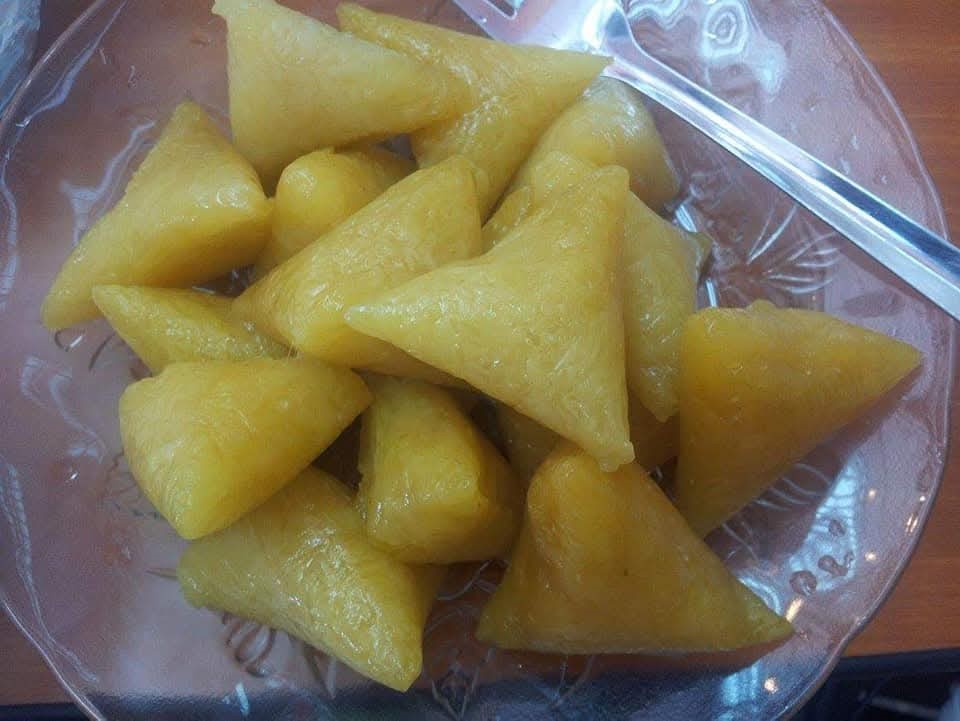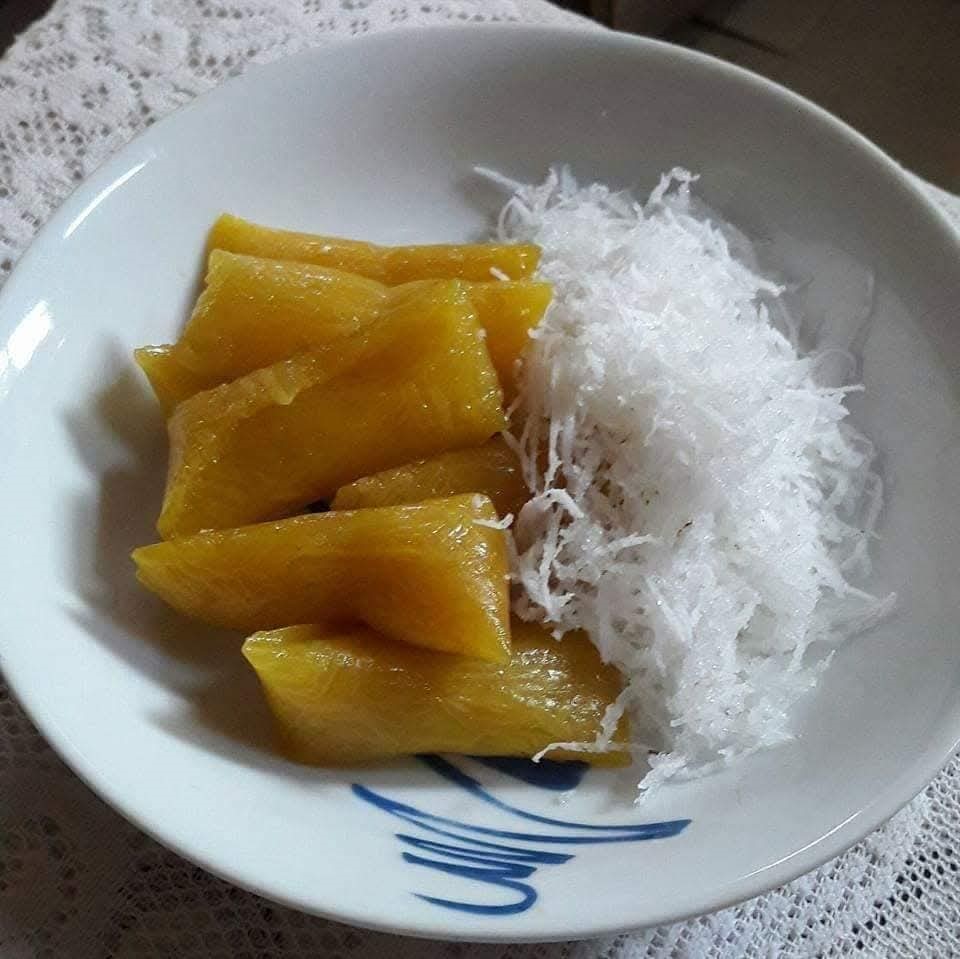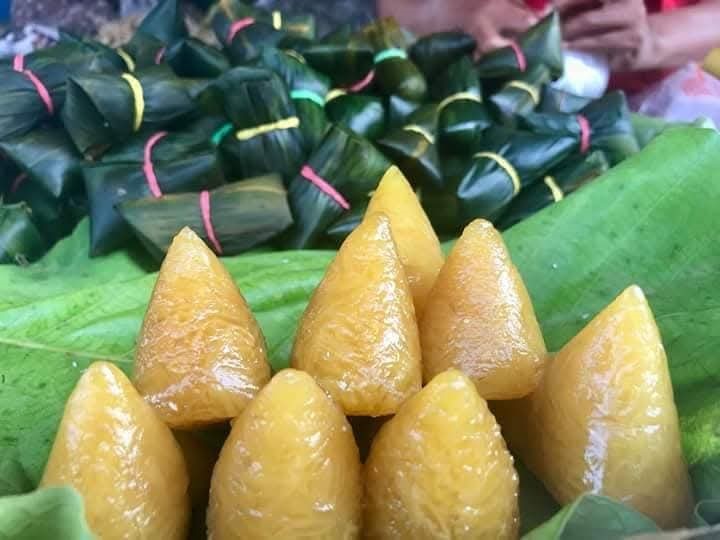
Wrapped neatly in green bamboo leaves or banana leaves in a distinctive triangular, cone-like shape, Pyayay Htoke is a traditional Myanmar delicacy. Once the leaves are unfolded, the glossy, translucent amber-coloured treat inside immediately catches the eye.
Made by cooking glutinous rice with clear lye water traditionally extracted from plant ash, this delicacy has a distinctive texture and a cooling, earthy character that reflects Myanmar’s culinary heritage.
Pyayay Htoke is best enjoyed with accompaniments rather than on its own. The glutinous rice is cooked until completely tender, giving the delicacy a firm, chewy, jelly-like texture. Eaten plain, it has little sweetness or saltiness, with only the mild, distinctive aroma of the lye water and a refreshing taste.
Its flavour comes alive when served with toppings. Drizzled with thick palm jaggery syrup, the sweetness seeps into the chewy rice. Add freshly grated coconut and roasted, ground sesame seeds, and the result is a wonderfully balanced combination of sweet, rich and nutty flavours without becoming overly cloying. Those who do not like palm jaggery may simply sprinkle sugar over it instead.
Ingredients
(The following quantities are suitable for making a family-sized batch at home.)
For the rice parcels:
1. Glutinous rice – 2 cups
2. Food-grade lye water – about 1½–2 tablespoons, adjusted according to its strength
[See the separate section below for how to prepare traditional lye water.]
3. Vegetable oil or pure peanut oil – 1 tablespoon, to prevent sticking and give the rice a glossy, smooth texture
4. Dried bamboo leaves or banana leaves – as needed for wrapping
5. Bamboo strips or kitchen twine – for tying the parcels
For serving:
6. Thick palm jaggery syrup or sugar
7. Freshly grated coconut
8. Roasted white or black sesame seeds, lightly ground
Method
1. Soak the glutinous rice and mix with lye water
Wash the glutinous rice thoroughly and soak it in water for at least 3-4 hours. Drain it completely in a colander.
Add the clear lye water and oil to the drained rice and gently mix until evenly coated. The grains will gradually turn pale yellow when they come into contact with the lye water. Leave the rice to rest for about 30 minutes.
2. Soften the wrapping leaves
If using bamboo leaves, wash them thoroughly and soak them in hot water for about 10 minutes. If using banana leaves, lightly pass them over a flame to soften them. This makes the leaves flexible and prevents them from tearing when folded.
3. Wrap the rice into triangular parcels
Fold each leaf into a triangular, cone-like shape and spoon in the lye-water-treated glutinous rice.
Note: Do not fill the parcels, as the rice will expand during cooking. Fill them to about three-quarters full. Fold the top of the leaf securely over the opening and tie firmly with bamboo strips or kitchen twine.
4. Boil the parcels
Fill a large pot with plenty of water and bring it to a rolling boil. Add the wrapped parcels, making sure they are fully submerged. Cover the pot and cook over medium heat for about 1½–2 hours.
If the water level drops during cooking, add hot water rather than cold water.
Continue cooking until the glutinous rice is completely tender and the parcels have developed a glossy, translucent amber colour and a firm, jelly-like consistency.
5. Cool and serve
Once cooked, remove the parcels from the pot and briefly place them in a bowl of cold water before draining.
Allow the parcels to cool completely, then unwrap the leaves and cut the delicacy into bite-sized pieces. Drizzle with thick palm jaggery syrup and sprinkle with grated coconut and roasted sesame seeds before serving.
Health Perspective
Pyayay Htoke has traditionally been enjoyed as a seasonal Myanmar snack, particularly for its cooling and refreshing qualities.
– A source of carbohydrates: Glutinous rice and palm jaggery provide carbohydrates and natural sugars, which can supply energy when the body is tired.
– Not deep-fried: Because the delicacy is boiled rather than fried in large amounts of oil, it does not contain the added fat associated with deep-fried foods.
– Traditional alkaline ingredient: Lye water is alkaline and contributes to the characteristic texture and colour of the delicacy.
However, lye water must be handled carefully. Only food-grade lye water intended for culinary use should be used, and the amount should be measured accurately. Excessive lye water can make the delicacy bitter and may irritate the digestive tract.
Because glutinous rice can take longer to digest, people with sensitive digestion should avoid eating large quantities late at night. Those with diabetes should also moderate their intake, particularly when the delicacy is served with palm jaggery syrup or sugar.
Traditional Preparation of Lye Water
The key to achieving the characteristic glossy amber colour and chewy, jelly-like texture of Pyayay Htoke is the clear lye water traditionally made by extracting alkaline compounds from clean plant ash.
Plant ash contains naturally occurring alkaline compounds, including potassium carbonate, which interact with the starch in glutinous rice and help produce the delicacy’s distinctive texture and appearance.
1. Selecting the ash
Because the lye water will be used for food preparation, not all types of ash are suitable. Use only clean plant ash from appropriate, untreated plant material.
Suitable sources include:
– Sesame stalk ash
– Dried banana leaves or dried banana stems
– Bean husk or bean-stem ash
– Clean ash from untreated hardwood
In some parts of Upper Myanmar, sesame stalk ash and dried banana-leaf ash are traditionally used.
Never use ash contaminated with plastic, household rubbish, painted or chemically treated wood, or manufactured charcoal briquettes.
2. Extracting clear lye water
Sift the ash:
Allow the ash to cool completely, then pass it through a fine sieve to remove charcoal pieces, debris and coarse particles.
Mix the ash with water:
For every 1 cup of clean ash, add 3-4 cups of clean water to a glazed ceramic pot, earthenware pot or large glass bowl. Stir for several minutes with a clean wooden spoon or bamboo stick until the ash is thoroughly mixed with the water.
Do not use aluminium cookware or containers.
Allow the mixture to settle:
Cover the container and leave it undisturbed for 12:24 hours, preferably overnight. The ash particles will settle at the bottom, leaving a pale amber, tea-coloured liquid above.
Collect and filter the clear liquid:
Carefully scoop the clear liquid from the surface without disturbing the sediment. Filter it again through about three layers of clean muslin cloth or through a coffee filter to remove any remaining ash particles.
Traditionally, another method involves placing straw and cloth in a clay pot with a small hole at the bottom, packing the ash inside and slowly pouring water over it. The clear lye water then drips through the bottom and is collected.
3. Testing the strength of the lye water
Because natural ash varies in composition, the strength of homemade lye water can vary.
Check the colour:
It should be clear and pale, resembling weak tea. If it is excessively dark, it may be too strong and should be diluted with a little clean water.
Do not taste it:
Lye water should never be tasted directly. Strong alkaline liquid can burn or irritate the tongue and mouth.
Test with glutinous rice:
Mix a small handful of soaked glutinous rice with a little lye water. If the grains begin turning pale yellow within about 15 minutes, the strength is considered suitable.
4. Storage and safety
Store filtered lye water in a glass bottle or food-grade plastic container with a tightly sealed lid. Avoid storing it in metal or tin containers.
Homemade natural lye water may be weaker than commercially prepared food-grade lye water. Therefore, the amount used should be adjusted according to its strength and the recipe.
For 2 cups of glutinous rice, approximately 2-3 tablespoons of homemade lye water may be used, depending on its concentration.
With its glossy amber colour, pleasantly chewy texture and combination of palm jaggery, coconut and roasted sesame, Pyayay Htoke offers a distinctive taste of Myanmar’s traditional culinary heritage – one that can be enjoyed with family, especially during the cooler months. — Moon