By Junior Thin
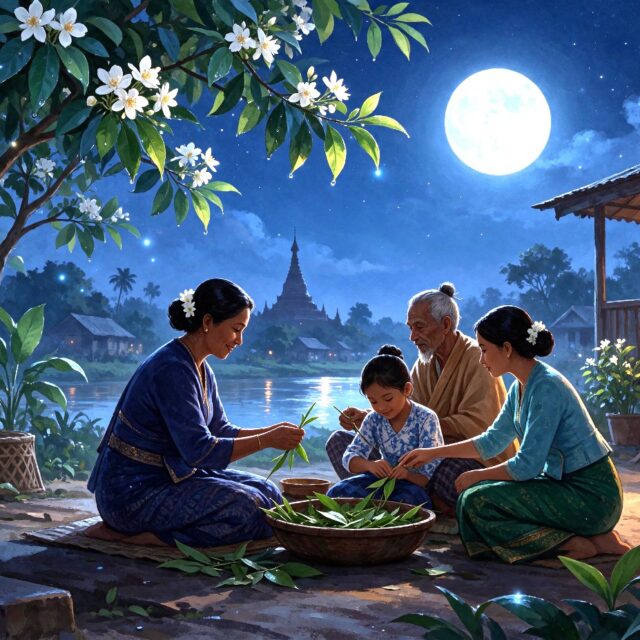
On the full-moon night of Tazaungmone, the sky above Myanmar is often imagined as a vast, luminous garden. The moon shines brightly, the stars appear in their multitude, and the cool night air carries a sense of stillness and expectancy. In Myanmar tradition, this is more than a beautiful night to admire the heavens. It is believed to be a special time when medicinal power settles upon plants, renewing their healing qualities. The custom is especially associated with the Mezali tree, whose leaves, flowers, and other parts are gathered and eaten in the hope of warding off illness and bringing good health.
The name “Tazaungmone” belongs to the eighth month of the Myanmar lunar calendar, and its full moon is observed with religious and cultural activities. People may visit pagodas, offer lights, make donations, or take part in community celebrations. Yet alongside these public observances, many households mark the night in a quieter and more intimate way: they look to the plants around them. The belief that nature receives a special blessing under the full moon connects the celestial world with everyday wellbeing. The stars and moon are not simply a backdrop; in folk imagination, they are part of a living order that can influence the earth below.
According to the tradition, the clear sky and bright moonlight of Tazaungmone create especially favourable conditions for medicinal qualities to gather in plants. People describe this process with the evocative idea that “medicine settles” on the leaves, blossoms, or fruit. The phrase suggests that plants are touched by a temporary, beneficial power – something bestowed by the night itself. The belief is particularly linked to the Mezali tree, which is regarded as a fitting source of ingredients for a full-moon-night remedy.
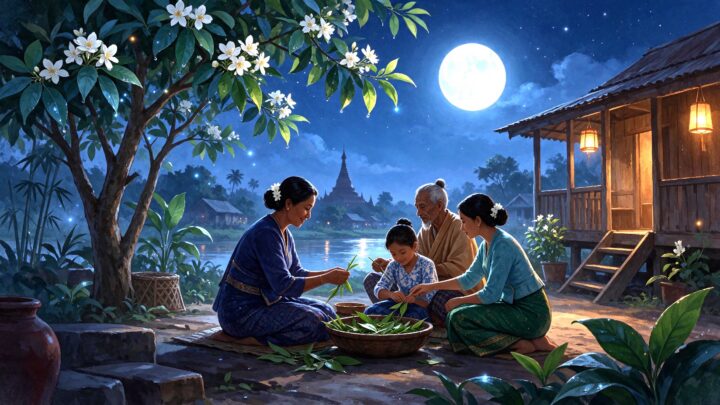
As evening deepens, families may prepare to collect Mezali leaves or buds of the tree. In some places and households, people make a salad from the leaves, mixing them with ingredients such as onion, oil, salt, or other seasonings. Recipes and customs can vary from one family or community to another. What matters most is not a single fixed preparation, but the meaning attached to gathering and eating the plant at this particular time. The food becomes a way of welcoming the night’s blessing and sharing it among family members.
The custom is also an expression of care. Elders may tell younger relatives about the belief, explain which plant to gather, and show how it is prepared. Children and adults can take part together, turning the practice into a small family ritual. A bowl of greens eaten under the influence of tradition is not merely a dish; it carries memories, stories, and hopes for the coming year. For some, the taste may recall childhood evenings, the smell of the night air, and the warmth of relatives gathered around a meal.
At the heart of the observance is the hope that consuming plants touched by medicinal power can protect people from sickness or help them recover from a range of ailments. Some believe that the leaves, flowers, or fruit gathered on this night can help prevent disease and preserve health. Such ideas belong to a long-standing relationship between communities and the natural world. Before modern healthcare was widely available, people often relied on local plants, inherited knowledge, and household remedies. Beliefs about a plant’s strength could be intertwined with practical experience, spirituality, and the desire to keep loved ones safe.
It is important, however, to understand the healing claims as traditional belief rather than established medical fact. A plant eaten as part of a custom should not be assumed to cure every illness, and a traditional food is not a substitute for professional medical care. Nor should unfamiliar plants be gathered or consumed without reliable identification and appropriate guidance. Recognizing these distinctions does not diminish the cultural significance of the practice. Instead, it allows the tradition to be appreciated with respect while keeping health decisions grounded in evidence and safety.
The Mezali custom reflects a wider human impulse to find meaning in the meeting of sky, season, and body. The full moon’s brightness gives the night a special atmosphere, while the act of collecting leaves turns that atmosphere into something tangible. People cannot hold moonlight in their hands, but they can gather a plant beneath it, prepare it, and share it. Through this simple act, an invisible blessing becomes part of a meal and part of family life.
The Tazaungmone full moon day is also a time of generosity and communal spirit. Across Myanmar, people may share food, make offerings, and join in religious or social activities. The practice of eating Mezali greens fits naturally within this wider mood of wellbeing and goodwill. A family may prepare enough for everyone; neighbours may exchange greetings; elders may pass on the story to younger generations. The custom thus strengthens bonds as much as it expresses hopes for physical health.
For many people, the image of medicinal power settling on plants is most vivid beneath a clear, star-filled sky. It suggests that the earth is not separate from the heavens, and that even ordinary leaves may become extraordinary when surrounded by meaning. Whether understood as faith, inherited wisdom, or cultural symbolism, the belief gives Tazaungmone night a distinctive place in Myanmar’s seasonal life.
When the full moon rises and the stars shine overhead, the Mezali tree becomes more than a source of greens. It stands as a symbol of nature’s generosity and of the hope that each new season may bring protection and renewal. The tradition of gathering and eating its leaves preserves a connection between people, plants, and the night sky – a reminder that health is cherished not only through remedies, but also through shared rituals, remembered stories, and care for one another.