The practical experience of veteran traditional medicine practitioners needs to be bridged with the research capabilities of the next generation of professionals.
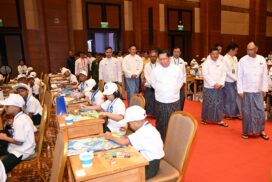
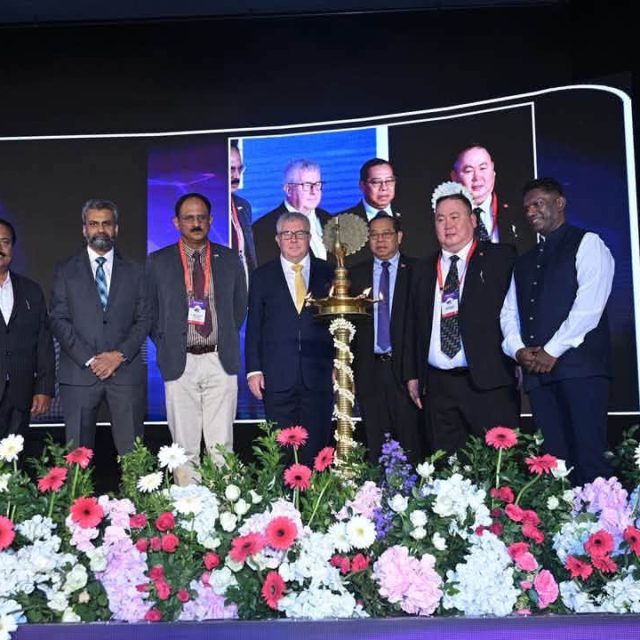
President of the Republic of the Union of Myanmar Agga Maha Thray Sithu Agga Maha Thiri Thudhamma U Min Aung Hlaing sent a message to the ceremony to commence the 25th Traditional Myanmar Medicine Practitioners Conference and the Traditional Myanmar Medicine Symposium on 30 November 2026. The full text of the translated message is as follows: –
First of all, I would like to extend my warm greetings and best wishes for good health and well-being to all the officials, distinguished traditional medicine practitioners, experts from various related fields, and guests attending today’s 25th Traditional Myanmar Medicine Practitioners’ Conference and Traditional Myanmar Medicine Symposium.
Myanmar’s traditional medicine is a valuable national heritage that has been preserved and passed down from generation to generation since our forefathers’ time. It is also a trusted field of knowledge that has played a vital role in safeguarding the people’s health from ancient times to the present day.
Traditional Myanmar medicine encompasses the extensive knowledge and experience of traditional medicine practitioners in identifying medicinal plants, formulating medicines, and applying various practical therapeutic methods. I would like to express my respect and appreciation to generations of traditional medicine practitioners who have preserved and passed down this knowledge while dedicating themselves to safeguarding the people’s health with compassion and goodwill.
A healthy and strong workforce is the foundation of a nation’s long-term development. Therefore, alongside modern medicine, traditional Myanmar medicine must also be systematically developed and advanced as a national responsibility. In promoting its development, emphasis must be placed on preserving traditional knowledge, conducting research to assess the safety and efficacy of medicines and therapeutic methods, and applying the knowledge gained through such research to public healthcare.
The Traditional Myanmar Medicine Practitioners’ Conference and the Traditional Myanmar Medicine Symposium have been held annually since 2000, and this year marks the 25th conference and symposium, celebrating their silver jubilee. I would also like to express my gratitude to the distinguished medical experts, traditional medicine practitioners, and all individuals from various related sectors who have worked together in unity over the past 25 years to contribute to the interests of the State and the well-being of the people.
This year’s conference has four main objectives:
• To expand primary healthcare services for the public through traditional Myanmar medicine.
• To promote the development of traditional Myanmar medicine through the application of modern technologies.
• To enhance compliance with professional ethics among practitioners in order to uphold the dignity and reputation of traditional medicine.
• To preserve, safeguard and further promote traditional medicine practices and methods.
To translate these objectives into practical action, I would like to encourage participants to discuss not only their research findings but also the challenges they encounter in hospitals, clinics and field operations. I also urge you all to make recommendations based on practical conditions, identifying services that should be expanded for the public, medicines and therapeutic methods that should be prioritized, and areas requiring further strengthening to ensure quality control.
Similarly, training qualified professionals is a key factor in the development of traditional medicine. Therefore, the University of Traditional Medicine (Mandalay), which was inaugurated on 9 January 2002, has been producing professionals holding the Bachelor of Traditional Myanmar Medicine (BTMM) and Master of Traditional Myanmar Medicine (MTMM) degrees. With the government’s support, the Doctor of Traditional Myanmar Medicine degree programme has also been offered since January 2025.
In addition, several training courses were conducted in 2026, including a practical course in general disease treatment, a hospital management and leadership course for traditional medicine practitioners, and courses on quality control, stability and shelf-life studies of traditional medicines and health supplements. The knowledge gained from these courses needs to be applied in practice in hospitals, clinics and activities related to the quality control of medicines.
It is also necessary to bridge the practical experience of veteran traditional medicine practitioners with the research capabilities of the next generation of professionals. I would like to urge the university, hospitals and relevant organizations to work together by compiling and documenting the professional knowledge and experience of senior practitioners, incorporating these records into teaching, and providing young professionals with opportunities to participate actively in research activities.
In fulfilling the Ministry of Health’s objectives of enabling everyone to live a long and healthy life and remain free from disease, the Department of Traditional Medicine must also play its part. I am pleased to acknowledge the expansion of short-term basic traditional medicine awareness courses in the Nay Pyi Taw Union Territory and various regions and states.
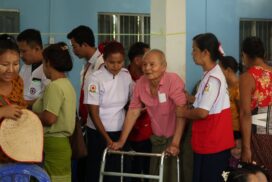
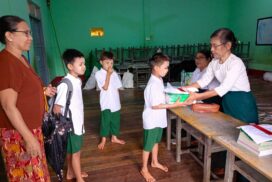
It has been observed that traditional medicine hospitals and clinics have expanded their services beyond providing inpatient and outpatient care to include community-based medical treatment through field visits and health education programmes in schools. In expanding primary healthcare services, patient safety must be given priority. Health education activities should clearly explain disease prevention, the proper use of medicines in line with instructions, and the importance of seeking timely medical attention at hospitals and clinics in a way that the public can easily understand.
At hospitals and clinics, patients’ conditions must be carefully assessed. If further examinations or specialized treatment are required, patients should be referred to the appropriate hospitals or clinics in a timely manner. Therefore, I would like to urge traditional medicine practitioners and other healthcare professionals to make utmost efforts to further strengthen cooperation and coordination between them.
I would like to express my gratitude to all traditional medicine practitioners, staff members and other participants who have joined hands with relevant organizations to provide healthcare services to disaster-affected people and deliver assistance to communities facing difficulties during natural disasters.
The government has been undertaking various measures, including upgrading traditional medicine hospitals and clinics, training and producing qualified professionals, organizing annual research paper-reading sessions, and supervising the production, distribution and sale of traditional medicines to ensure compliance with prescribed standards and specifications. To generate greater practical benefits for the public through these efforts, research, pharmaceutical production and healthcare services must be closely integrated.
In conducting research, commonly used traditional medicines and therapeutic methods should be given priority for selection, with their safety, efficacy and precautions for use examined systematically in successive stages. Research findings should be fully documented, covering their benefits, side effects and limitations. Relevant institutions, including the University of Traditional Medicine, hospitals, research units and laboratories, need to work together to ensure that the evidence obtained is applied to teaching, medical treatment and the improvement of medicine quality.
Traditional medicine manufacturers must also maintain quality at every stage of production, from verifying the authenticity and cleanliness of raw material sources to formulation, manufacturing, packaging, storage, distribution and sale. Medicine labels must clearly indicate the ingredients, directions for use, precautions and expiry dates. I would also like to urge all to spare no effort in strengthening procedures for reporting adverse events, which are associated with the use of medicines to the relevant departments, so that necessary investigations and reassessments can be carried out when required.
To ensure the long-term preservation of traditional Myanmar medicine, traditional medicinal practices passed down through generations in various regions should be documented and compiled with the consent of the original practitioners and local communities. These records should identify the origins of the respective traditional knowledge and be organized for use in education and research.
Medicinal plants and rare plant species should also be conserved in their natural habitats, with efforts made to replant and propagate them. Relevant departments, growers and traditional medicine manufacturers should work together to identify and verify plant species and apply appropriate methods for cultivation, harvesting and storage. These efforts will ensure a sustainable supply of quality raw materials for pharmaceutical production in the long term.
Myanmar is cooperating with ASEAN member states in the field of traditional medicine. It is also engaging in cooperation through international organizations and regional frameworks, including the Shanghai Cooperation Organization (SCO), BIMSTEC and the Mekong regional cooperation frameworks. Furthermore, Myanmar is maintaining communication and cooperation in the traditional medicine sector with partner countries such as China and India.
At today’s conference and symposium, I would like to encourage experts to openly and candidly exchange views and discuss not only their research findings but also the challenges they have encountered in practical implementation and the solutions they have developed to address them. I also urge you all to prioritize and identify recommendations that are beneficial to the public and can be practically implemented.
Following the conference, I would like the relevant departments and professional organizations to continue working on the necessary follow-up processes for each recommendation, including assigning responsible organizations, identifying collaborating organizations and setting target timeframes for achieving the expected results. You all should also review the progress made and the challenges encountered, and take additional measures as necessary.
In conclusion, I wish all distinguished traditional medicine practitioners and the new generation of professionals continued success in preserving, further developing and promoting Myanmar’s traditional medicine heritage, and in continuing to serve the public’s healthcare needs with goodwill, dedication and selfless commitment. I hereby deliver this message, with the hope that the 25th Traditional Myanmar Medicine Practitioners Conference and the Traditional Myanmar Medicine Symposium will produce positive outcomes to enable the public to gain greater access to safe and reliable healthcare services.
Agga Maha Thray Sithu, Agga Maha Thiri Thudhamma
U Min Aung Hlaing
President, Republic of the Union of Myanmar